Mansions for sale
in France
Normandy, Brittany, Loire Valley, Dordogne, Provence — complete guide to manor houses for sale in France: definition, regions, prices and selection of listings for characterful and prestigious manor houses.
The manor house is one of the most sought-after types of character property in France. Halfway between a beautiful bourgeois residence and a castle, it embodies a certain idea of French architectural heritage—stone, slate, round towers, dry or water-filled moats, and wooded parkland. Its market is dynamic, fueled by French and international clients seeking authenticity, generous living spaces, and an exceptional lifestyle far removed from standardized properties.
What is a manor house? Definition and distinctions
A manor house is a medium-sized stately home, generally built between the 14th and 19th centuries, characterized by stone architecture, defensive or decorative features (towers, turrets, moats), and an adjoining park or agricultural estate. It differs from a castle in its more modest size and lack of a strong defensive purpose, and from a simple manor house in its historical character and its place within the tradition of French manorial architecture.
A castle is generally more imposing, with defensive towers, a moat, and monumental architecture. A manor house is more intimate—it shares certain architectural features (stone, slate, corner tower) but lacks the scale of a castle. The distinction is not legal but architectural and historical.
The manor house is a beautiful bourgeois residence, often 18th or 19th century, without any lordly character. The manor house, on the other hand, is earlier or contemporary — it has a historical link with feudal or Renaissance architecture and reflects a particular social function within its territory.
A manor house typically comprises 8 to 20 main rooms, with a living area of 250 to 800 m², situated on a plot of land or grounds of 1 to 10 hectares. Outbuildings (barn, stable, orangery, gatehouse) are common and represent significant potential for increased property value.
Local stonework, slate or tile roofs, sculpted dormer windows, stair turrets, monumental chimneys, wells, moats – all these elements define the architectural identity of the French manor house. These details are central to the property's heritage value.
Geography
The major manor house regions in France
Manors are found throughout France, but some regions concentrate a particularly remarkable density and architectural quality.
Normandy boasts the highest concentration of manor houses in France—several thousand properties have been recorded, stretching from the Cotentin Peninsula to the Pays de Caux. Norman architecture is recognizable by its half-timbering, brickwork, and flint, as well as its limestone manor houses with Mansard roofs. The Pays d'Auge, the Touques Valley, and the Norman bocage countryside are home to some of the most beautiful properties. Its proximity to Paris (2 hours), rolling landscapes, stud farms, and the D-Day landing beaches make Normandy the most active manor house market in France.
Breton manor houses are among the oldest and most distinctive in France—often built of grey granite, with steep slate roofs, gabled dormer windows, and hexagonal stair turrets. Finistère, Morbihan, and Côtes-d'Armor boast the finest examples, often nestled in the bocage countryside or near the Atlantic coast. Brittany still offers relatively affordable prices compared to Normandy for properties of comparable quality.
The Loire Valley, cradle of the French Renaissance, is a region of châteaux—but also of numerous fine manor houses, often overshadowed by the grand royal fortresses. The departments of Loir-et-Cher, Indre-et-Loire, and Maine-et-Loire boast a concentration of remarkable Renaissance and Classical manor houses, frequently accompanied by vineyards (Vouvray, Chinon, Bourgueil, Sancerre). The UNESCO World Heritage status of the Loire Valley further enhances the heritage value of the region's properties.
The Périgord Noir, Périgord Vert, and Lot regions boast an exceptional concentration of medieval and Renaissance manor houses built with Périgord stone—a golden limestone that lends the buildings an incomparable warmth. The Dordogne is the leading French market for character properties for English-speaking international buyers, who have been purchasing in this region for several decades. Sarlat, Les Eyzies, Bergerac, and Périgueux are the hubs of this very active market.
Provençal manor houses are less numerous—the region has developed more bastides and mas—but certain valleys (Luberon, Alpilles, Var) boast remarkable stately homes. In the Southwest, Gascony, Gers, and the Pyrénées-Atlantiques offer brick and river pebble manor houses at still very affordable prices, in exceptional natural settings.
Often overlooked, the manor houses of Northern France and Picardy offer excellent value for money. With their Flemish brick, sandstone, or limestone architecture, walled parks, and moats, these regions hold heritage treasures at prices below the national average, with the added benefit of excellent accessibility from Paris, Belgium, and the United Kingdom (Eurostar).
Price of a manor house in France — price ranges by region
The price of a manor house depends primarily on four factors: the region, the living area, the overall condition of the property, and the size of the land. Manors requiring significant renovations can be acquired at prices well below the ranges listed below, but the cost of restoration must absolutely be factored into the overall budget.
A manor house in need of renovation can be acquired for 30 to 50% less than a fully restored property. The cost of restoring a manor house generally varies between €1,000 and €2,500 per square meter, depending on its initial condition, the materials chosen, and the region—a crucial factor to include in the financing plan.
Points to consider
Buying a mansion — what you need to know
The condition of the building and the works
Purchasing a manor house requires a thorough technical assessment before signing. Roofing (framing, slates, zinc work), masonry (cracks, damp, efflorescence), timber framing (dry rot, termites in the South), antique woodwork, utilities (electricity, plumbing, heating) – each aspect must be evaluated by a professional. A preliminary inspection with an architect or a project manager specializing in historic buildings is strongly recommended before making any offer.
Listing as a Historical Monument
Some manor houses are listed or registered as Historical Monuments. This status entails restrictions on renovations (approval from the Architect of the Buildings of France is mandatory for any modification) but also grants significant tax advantages—deductibility of restoration costs from taxable income, exemption from inheritance tax under certain conditions. A listed Historical Monument property is both a constraint and a tax and estate planning opportunity.
The tax regime for historical monuments
Investing in a manor house listed or registered as a Historic Monument allows you to deduct all restoration costs (renovation, insurance, maintenance) from your overall income, without any limit, provided you open the property to the public. This scheme can represent very significant tax savings for high-income taxpayers.
The exploitation potential
A manor house can be used for several types of activities in addition to residential use: high-end bed and breakfast, event rentals (weddings, seminars), self-catering cottages in the outbuildings, and equestrian activities on the estate. These activities can generate additional income while contributing to the upkeep of the property—an increasingly common business model for manor house owners.
- Have a complete building assessment carried out by a professional specializing in historic buildings before making any offer
- Check the property's status (listed MH, protected area, ZPPAUP, PLU) with the town hall and the ABF (Architectes des Bâtiments de France)
- Obtain accurate restoration quotes before finalizing your purchase offer
- Include the annual maintenance costs of the park and grounds in the property budget
- Assess the potential for development (holiday cottages, events, equestrian activities) to reduce net costs
- Consult a tax specialist regarding the Historic Monuments regime if the property is registered or listed
Browse our mansions for sale in France
Propriétés De Charme offers a selection of manor houses and character properties in France and internationally. Use our search engine to refine your search by region, size, and budget.
View mansions for sale →Read also
Other types of character properties
The manor house is just one of the many types of character properties available on Propriétés De Charme. Discover also our selection of castles, country houses, farmhouses, stately homes and estates in France and internationally.
List or find
your prestigious mansion
Are you a professional or a private owner? Showcase your mansion to a qualified audience. Looking to buy? Browse our selection.
🏢 Agencies & Professionals
Real estate agencies, agents, notaries — promote your prestigious listings to a qualified French and international clientele. Platforms available.
Publish my ads🏡 Private owners
Sell your manor house directly to qualified buyers, without an agency. Properties accepted from €600,000. Promotional packages available.
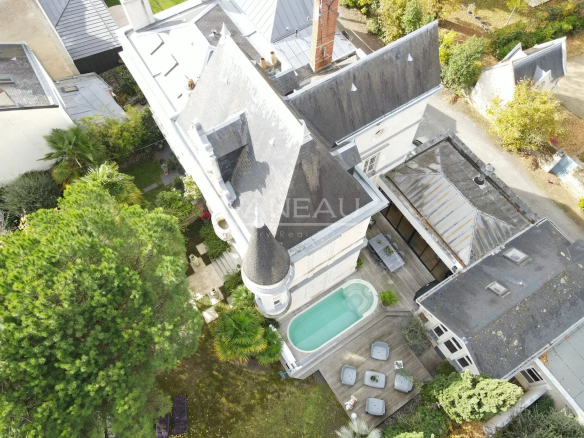
Post my adSumptuous renovated manor house in the heart of Angers with swimming pool
The Exception in the Heart of Angers – Private Mansion with Garden, Swimming Pool and Garage...
- Luxury Mansions, Villas, Houses & Villas
- 225 m²
- 10 Pieces
- 4 Rooms
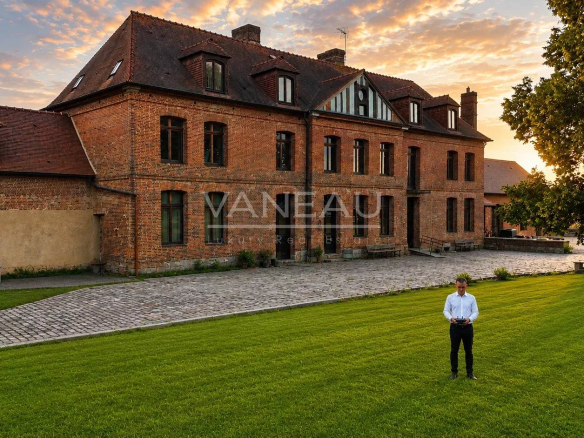
Former 18th-century coaching inn of 700 m² (residential and event space) – Near Rouen –
The "Manoir Henri IV," a former coaching inn, partially renovated, allows...
- Luxury Mansions, Villas, Houses & Villas
- 700 m²
- 12 Pieces
- 0 Bedroom
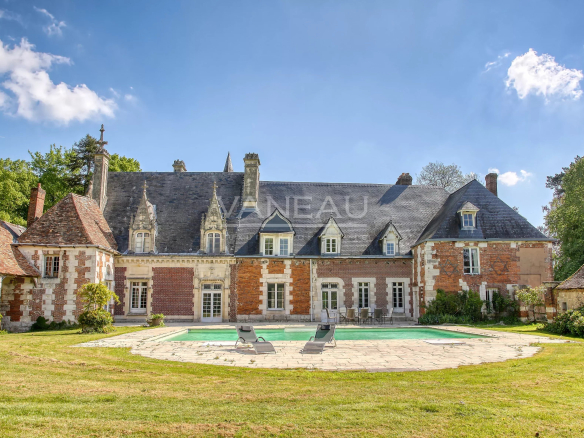
Rouen – Magnificent manor house in a 2-hectare park – Charm and authenticity.
15 minutes from Rouen, 35 minutes from Deauville and 1 hour 20 minutes from Paris,...
- Luxury Mansions, Villas, Houses & Villas
- 500 m²
- 15 Pieces
- 6 Rooms