Thailand has established itself as one of the most sought-after destinations for luxury real estate investment in Southeast Asia. Breathtaking landscapes, a dynamic economy, and an attractive cost of living: the country combines rare advantages that few markets can offer simultaneously. Every year, investors from around the world turn to Bangkok, Phuket, or Chiang Mai to diversify their portfolios, acquire a second home, or prepare for their retirement under the tropical sun. However, it's essential to understand the rules of the game. Here's everything you need to know before taking the plunge.
Why Thailand is attracting international real estate investors
A competitive market facing Asian giants
Comparing Thailand to Hong Kong or Singapore highlights the stark contrast: for equivalent size and quality, a luxury villa in Phuket costs a fraction of the price in these saturated metropolises. Even better, the market isn't stagnating. Bangkok, Phuket, and Koh Samui are experiencing sustained price appreciation, driven by growing international demand and record-breaking tourism. For the savvy investor, it's the ideal combination: a reasonable entry price and real potential for capital gains.
A quality of life that's hard to beat
Beyond the statistics, Thailand offers a lifestyle that many envy. White sand beaches, ancient temples, world-renowned cuisine, and the legendary hospitality of its people: the country appeals to both serious investors and those who dream of settling there. Many expatriates choose to spend their winters there, or even retire there, transforming their investment into a true lifestyle.
A tax system favorable to foreign investors
Thailand has deliberately created a tax environment attractive to foreign capital. Property taxes remain moderate compared to Western standards, and rental yields in tourist areas can be particularly generous. High-traffic areas like Patong in Phuket or central Bangkok boast high occupancy rates year-round, ensuring reliable rental income.
Top destinations for luxury real estate investment
Bangkok: the capital that never sleeps
Bangkok alone accounts for a considerable portion of Thailand's luxury real estate. A nerve center of business, a diplomatic and cultural hub, the capital attracts a large and affluent expatriate community. The Sukhumvit and Sathorn districts remain the most sought-after addresses: modern infrastructure, proximity to public transportation (BTS Skytrain, MRT), five-star hotels, gourmet restaurants, and upscale shopping malls. Duplex apartments and penthouses there reach standards comparable to the finest European properties.
Phuket: the island of endless possibilities
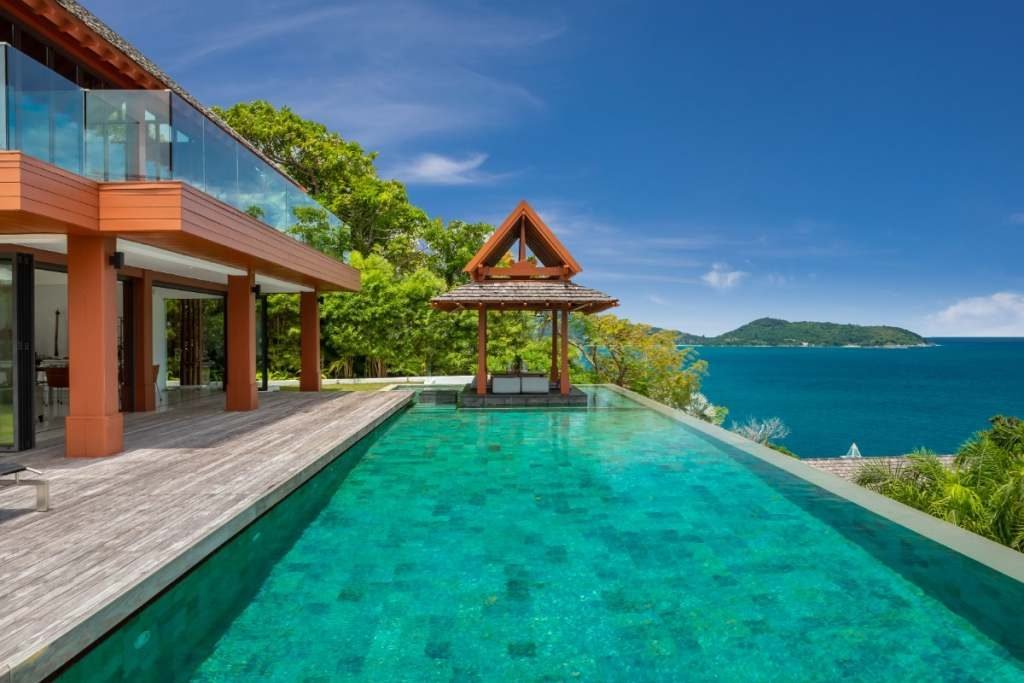
Phuket remains the ultimate benchmark for luxury beachfront real estate in Thailand. The island brings together everything international buyers seek: exceptional beaches, a thriving international community, high-quality medical and educational facilities, and an international airport serving major world capitals. Villas perched on the hills of Kata or Kamala, offering panoramic views of the Andaman Sea, are among the most sought-after properties on the market. Demand regularly exceeds supply in prime areas.
Chiang Mai: the discreet charm of the north
Less spectacular than Phuket but just as captivating, Chiang Mai appeals to a different type of investor. This city nestled in the northern mountains attracts those who appreciate culture, nature, and tranquility. Its particularly low cost of living, vibrant arts scene, and numerous temples make it a popular destination for retirees and digital nomads. Luxury real estate here often takes the form of renovated traditional houses or contemporary villas surrounded by lush tropical gardens.
The legal framework: what every foreign buyer should know
Restrictions on foreign ownership
Thai law strictly regulates property ownership for foreign nationals. A fundamental rule is that a foreigner cannot own land outright. However, acquiring a condominium unit is perfectly possible, provided that the foreign ownership percentage in the building does not exceed 49% of the total floor area. To circumvent this land restriction, some investors opt to establish a Thai company, a legally regulated practice that nonetheless requires rigorous due diligence and serious legal counsel.
A purchasing process that requires local experts
The property acquisition process in Thailand involves several specific steps: verification of the title deed (Chanote), signing a preliminary contract, paying a deposit, and then the official transfer to the land registry. Each step can contain legal complexities that could trap an inexperienced buyer. Hiring a lawyer specializing in Thai real estate law is not a luxury, it's a necessity. The same applies to a local real estate agent, who is familiar with the market's specifics and any potential hidden defects in a property.
The major trends shaping the luxury market
Technology at the service of remote investment
Digital tools have profoundly transformed the way people buy property abroad. Virtual 3D tours, electronic signatures, and remote property management platforms: it is now possible to buy, manage, and even sell property in Thailand without leaving your country of residence. This digitalization of the sector opens the Thai market to a much wider range of investors than ever before.
New expectations since the pandemic
The health crisis has permanently altered buyers' selection criteria. Large living spaces, terraces, private pools, and wellness amenities (gym, spa, garden) have become decisive factors rather than mere options. This shift in preferences benefits Thailand, whose offering of spacious villas with outdoor areas perfectly meets these new requirements.
Strategies to optimize your return on investment
Carefully assess the risks before investing
Every investment carries a degree of risk, and Thai real estate is no exception. Fluctuations in the Thai baht, potential changes in foreign property laws, and dependence on international tourism are all factors to consider in your analysis. Diversifying locations and property types remains the best protection against market volatility.
Short-term or long-term rental: choosing the right strategy
Tourist areas like Phuket and Koh Samui are ideally suited to short-term rentals through international platforms, with gross returns potentially exceeding 8% in prime locations. Bangkok, on the other hand, caters to a clientele of expatriates and business travelers, better suited to longer-term leases, which are more stable but slightly less profitable. The ideal approach is often to combine both strategies depending on the season and the property's location.
Surround yourself with the right partners on the ground
The key to a successful investment in Thailand lies in the quality of your local team. Experienced real estate agents, specialized lawyers, and reliable property managers provide an essential safety net for navigating a market with rules that can sometimes be confusing for Western buyers. For those looking to rent out or sell their property, advertising on specialized platforms allows you to quickly reach a qualified international audience.
Thailand continues to attract real estate investors seeking off-the-beaten-path opportunities. With competitive prices, an exceptional quality of life, and a mature market, all the ingredients are there for a sound and rewarding investment. Provided you prepare thoroughly, consult with the right experts, and choose your location wisely, the potential for both financial and personal gains is considerable.
Have a question about a property or your project? Contact customer service; our team will answer you.