
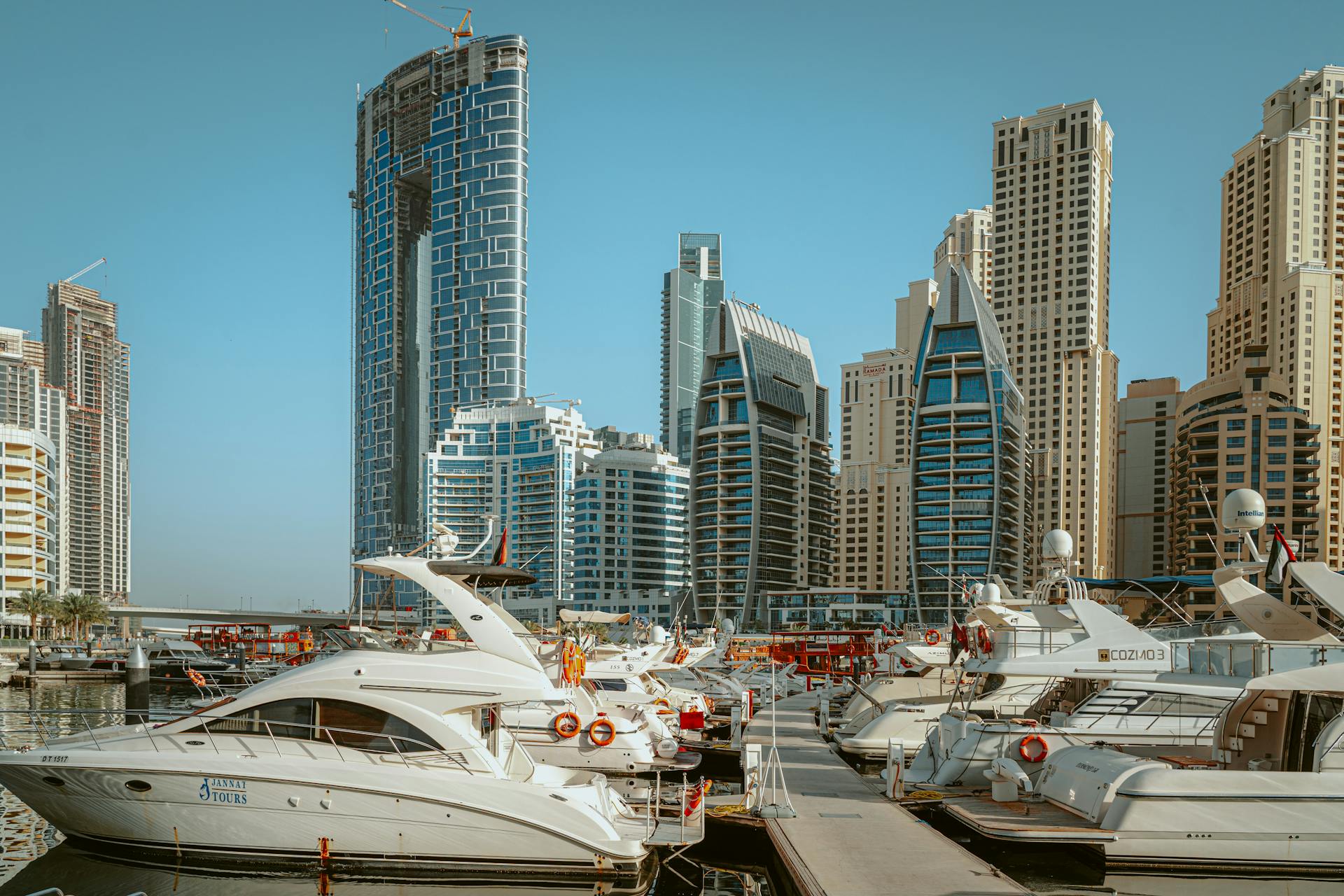
Dubai is captivating. Its breathtaking skyline, bold architectural projects, and booming real estate market attract thousands of international investors each year in search of exceptional properties. Yet, behind the obvious allure of this golden metropolis lie tax and regulatory realities that would be unwise to ignore. Before signing a preliminary sales agreement or paying a deposit, it's best to understand the rules of the game.
A rapidly expanding luxury real estate market
A city designed for the exceptional
In just a few decades, Dubai has established itself as one of the world's capitals of luxury real estate. The projects are spectacular: residences overlooking the Persian Gulf, glass and steel towers designed by leading architectural firms, and private villas equipped with amenities worthy of the finest palaces. The city is constantly reinventing itself, attracting wealthy clients from all corners of the globe.
The most sought-after neighborhoods for investors
Not all areas are created equal. Palm Jumeirah, with its beachfront villas and ultra-secure residences, remains a safe bet for buyers seeking absolute exclusivity. Downtown Dubai, dominated by the silhouette of the Burj Khalifa, appeals to those who want to be at the heart of the city's vibrant energy and luxury shopping scene. Dubai Marina, finally, offers a modern and cosmopolitan lifestyle, particularly popular with young investors and expatriates. Each of these districts provides immediate access to high-end amenities, from Michelin-starred restaurants and private marinas to some of the busiest shopping malls in the Middle East.
A particularly advantageous tax system for foreign investors
The absence of income tax: a decisive advantage
This is one of the most compelling arguments in Dubai's favor. The United Arab Emirates does not levy any personal income tax. In practical terms, this means that rental income from properties owned in Dubai is not subject to any local taxation. For an investor focused on rental profitability—particularly in high-demand areas like Dubai Marina or Downtown—this advantage represents a significant gain compared to other European or Asian markets where the tax burden can reach 30 to 45%.
It is important to remember, however, that each investor's tax situation also depends on their tax residency and the bilateral tax treaties between the UAE and their country of origin. A prior tax audit remains essential.
Registration fees: 4% to be paid at the time of purchase
Purchasing property in Dubai involves paying registration fees equivalent to 4% of the sale price. These fees are collected by the Dubai Land Department (DLD), the public body responsible for regulating the sector. In practice, they are often split equally between the buyer and seller, although this allocation remains negotiable between the parties. It is therefore advisable to factor this cost into your financing plan from the outset to avoid any unpleasant surprises.
The rules governing the purchase of real estate in Dubai
Freehold or Leasehold: two very distinct ownership regimes
Emirati real estate law distinguishes between two main forms of acquisition. The freehold grants the foreign buyer full ownership of the land and building, without any time limit. This is the most sought-after format and offers the greatest long-term legal security. The leasehold, on the other hand, grants a right of use over the property for a fixed term, generally set at 99 years. At the end of this period, the property typically reverts to the landowner.
Areas open to freehold purchases by non-residents are clearly defined by Emirati law. Palm Jumeirah, Downtown Dubai, and Dubai Marina are among them. Outside these designated areas, foreigners are generally limited to the leasehold regime. Before taking any steps, it is therefore essential to verify the legal status of the property in question.
The process of a real estate transaction in Dubai
The purchase process is generally well-structured, but it requires careful attention at every stage. Once the property has been identified and the price negotiated, the parties sign a preliminary sales agreement—the Memorandum of Understanding (MOU)—accompanied by a deposit typically representing 10% of the purchase price. The transaction is then registered with the Dubai Land Department, which issues the official title deed. Using a real estate agent certified by the RERA (Real Estate Regulatory Agency) is highly recommended to ensure that all steps comply with applicable legal requirements. To explore available properties, you can now search our selection of luxury properties.
Financing the purchase of a luxury property in Dubai
Financing options available to international buyers
Contrary to popular belief, access to mortgage loans in Dubai is possible for non-resident buyers. Several local banks—including Emirates NBD, Abu Dhabi Commercial Bank, and Mashreq Bank—offer mortgages to foreigners under certain conditions. The required down payment is generally set at 25% of the purchase price for non-residents, compared to 20% for UAE residents. Interest rates, meanwhile, can be fixed or variable depending on the institution.
Compare offers before committing
Loan terms vary considerably from one bank to another. Repayment period, annual percentage rate (APR), application fees, mandatory insurance: each parameter deserves careful scrutiny. Engaging a broker specializing in the UAE market can be a wise move to identify the offer best suited to your profile and project. An experienced financial advisor can also help you optimize your investment structure, taking into account your tax residency.
Essential legal precautions before signing
Why a local legal advisor is essential
UAE real estate law has specificities that only a seasoned professional can fully grasp. Engaging a local lawyer specializing in real estate transactions is not a luxury; it's a basic precaution. This professional will be able to verify the property's compliance, analyze its legal history (absence of debts, disputes, or encumbrances), and ensure that the seller has the necessary rights to transfer ownership.
Read and negotiate each clause of the sales contract
The sales contract must be examined line by line. Particular attention should be paid to the payment terms—especially if the property is purchased off-—the guaranteed delivery dates, and the penalties stipulated for delays by the developer. In a market as dynamic as Dubai's, where many projects are sold before completion, these clauses can make all the difference in the event of a dispute.
Investing in luxury real estate in Dubai presents a genuine opportunity, driven by some of the most favorable tax regimes in the world and a market that continues to attract a discerning international clientele. However, the success of such a project hinges primarily on meticulous preparation: understanding the regulatory framework, surrounding yourself with the right experts, and anticipating each step of the process. If you wish to take the plunge and showcase an exceptional property, you can publish your listing on our platform dedicated to prestigious properties. For any specific questions, our team is available: please don't hesitate to contact the Charming Properties customer service for personalized support.