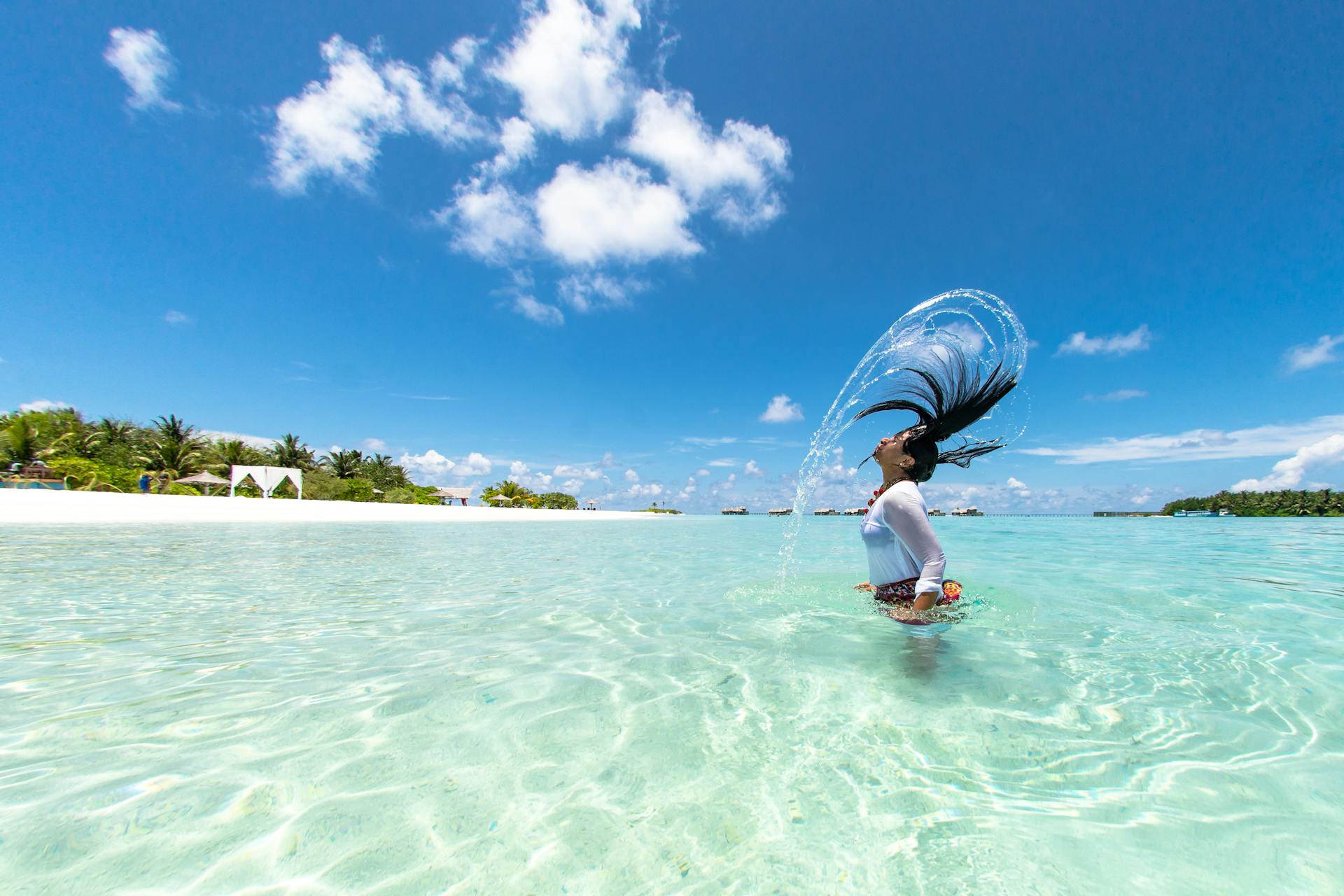
The Maldives exert a universal fascination. A coral archipelago suspended between the sky and the Indian Ocean, this territory of over 1,000 islands embodies the very idea of tropical paradise. White sand beaches, crystal-clear turquoise waters, coral reefs teeming with life… The desire to settle there permanently is understandable. But acquiring property in this exceptional setting is not something to be undertaken lightly. Legal restrictions, the specificities of the local market, financial constraints: here is everything you need to know before taking the plunge.
An atypical real estate market, between exclusivity and opportunities
Geography at the heart of the market
The Maldivian real estate market is unlike any other. Of the archipelago's approximately 1,200 islands, only about 200 are inhabited. This ratio gives each location considerable strategic value. Choosing the right island is therefore much more than a matter of personal taste: it's a decision that determines accessibility, quality of life, and the property's potential for appreciation. Available properties cover a wide spectrum, from overwater villas and residences integrated into local villages to private resorts.
Growth driven by international investors
In recent years, the Maldivian real estate sector has seen significant growth. Demand from foreign investors, attracted by the area's tourist appeal and prestige, has fueled this momentum. However, the market remains sensitive to global economic fluctuations and changes in local land and tourism policies. Therefore, any purchase decision must be based on a thorough analysis of the market context.
What the law actually allows for foreigners
The impossibility of holding a title of ownership in full ownership
This is the most important point to understand from the outset: foreigners cannot own land in the Maldives. Local legislation reserves full land ownership for Maldivian citizens. However, international investors can enter into long-term leases of up to 99 years, a well-regulated legal solution widely used for both residential and commercial projects. This mechanism offers sufficient security for long-term investment, provided all its intricacies are fully understood.
Legal procedures that should not be overlooked
Real estate transactions in the Maldives involve several essential legal steps. Verifying lease titles, drafting and negotiating contractual clauses, and officially registering the contract with the relevant authorities are all processes that require the assistance of an experienced local lawyer. Skimping on this legal support would be a costly mistake. A Maldivian legal professional will be able to identify potential administrative obstacles and ensure the entire transaction complies with regulations.
Types of property available in the Maldives
Villas on stilts: the iconic image of the archipelago
They have become the ultimate symbol of Maldivian luxury. Perched above the lagoon, these overwater villas offer total immersion in the marine environment. Direct access to the water from the terrace, unobstructed 360-degree ocean views, private infinity pools, and personalized concierge services: these properties meet the highest standards. They are primarily aimed at affluent clients seeking to combine investment with an exceptional lifestyle.
Residences on local islands: an authentic immersion
For those wishing to escape standardized luxury tourism, residences on inhabited islands offer an attractive alternative. More affordable, they allow for integration into the local social fabric and living at the pace of the Maldivian community. This type of property will be particularly suitable for buyers drawn to an authentic living experience, far removed from hotel resorts.
Anticipate the financial aspects
Prices vary depending on the island and services
Property prices in the Maldives vary considerably. Location remains the primary factor: a villa on a popular tourist island will obviously not be worth the same as a residence on a less frequented island. Size, amenities, and the quality of finishes are also taken into account. Added to this are often underestimated peripheral costs: local taxes, registration fees, legal fees, and maintenance costs, which can be high due to the islands' geographical isolation.
Funding almost exclusively in equity
Foreigners wishing to purchase property in the Maldives must be prepared to finance their purchase without resorting to local credit. Maldivian banks very rarely grant mortgages to non-resident foreigners. Equity investment is therefore the norm. In return, well-located properties can generate attractive rental yields, driven by sustained tourist demand throughout the year. Provided the property is managed effectively, the investment can prove particularly profitable.
Daily Life in the Maldives
A complete lifestyle
Settling in the Maldives means embracing a unique island rhythm, characterized by a deliberate slowness and a dependence on the weather and sea conditions. The Maldives is a predominantly Muslim country, and this cultural dimension is reflected in daily customs, schedules, and certain social practices. Respecting these customs is not only a sign of courtesy but also essential for harmonious integration into the local community.
Services vary depending on the islands
While Malé, the capital, boasts relatively well-developed medical and educational infrastructure, the situation is quite different on the outlying islands. Healthcare services may be limited, and schools may be nonexistent. Before settling on a particular island, it is essential to carefully assess the facilities available nearby, especially if the move is planned as a family or for an extended period.
The concrete steps to successfully complete your purchase
A structured, step-by-step process
1. Identify the ideal property : Start by defining your priority criteria (island, property type, budget) and use our tool to search for a property that meets your expectations.
2. Negotiate and make an offer : Once you have selected a property, begin negotiations to reach an agreement on the price and lease terms.
3. Conduct legal checks : Hire a local lawyer to audit the property documents, identify any potential disputes, and draft the necessary legal documents.
4. Finalize and register the transaction : Sign the lease agreement and register it officially with the relevant Maldivian authorities.
Support at every step
Do you still have questions after reading this guide? Our team is available to help. Don't hesitate to contact our customer service for personalized support throughout your project.
Acquiring property in the Maldives is an ambitious project, but perfectly achievable with thorough preparation and the right contacts. A well-understood legal framework, advance financing, and a carefully considered island selection: each step deserves meticulous attention. This small island nation has much more to offer than just a picture-postcard setting. For those who approach it methodically, it can become the setting for a lasting investment and a truly enviable lifestyle.