
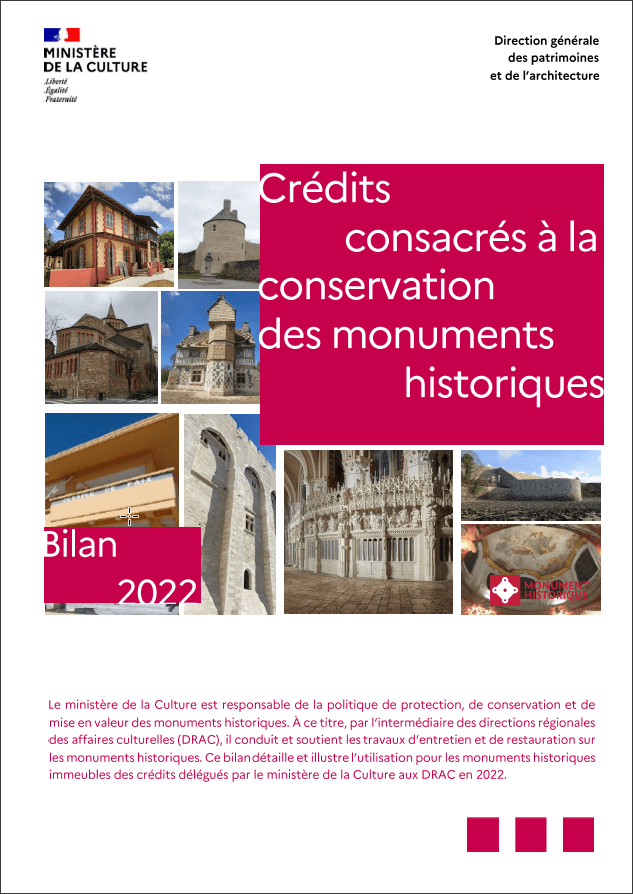
Buying or Selling a Historical Monument in France
Owning a listed historical monument in France is not just about living in a place steeped in history—it also means entering a specific legal and tax regime, very different from that of a typical historic property. Understanding this framework is essential before any purchase or sale.
Classified or registered: two statuses, two levels of constraint
A building can be listed as a historical monument—the highest level of protection, reserved for properties of national interest, approximately 14,000 buildings in France—or simply registered in the supplementary inventory, a more flexible status covering around 30,000 properties. In both cases, any work on the building requires the approval of the Architect of the Buildings of France (ABF) and, depending on the scope of the work, the Regional Directorate of Cultural Affairs (DRAC).
A truly unique tax system in France
This is the least understood point, yet the most crucial for an investor. Under Article 156 of the French General Tax Code, owners of a listed historical monument can deduct all of their property expenses—restoration work, loan interest, maintenance—from their total income, not just from their rental income as with a standard property. This deduction is unlimitedand is not subject to the overall €10,000 annual cap on tax breaks that limits most other real estate tax relief schemes.
Another major advantage: under an agreement with the Ministry of Culture—which commits the owner to opening the property to the public and maintaining it sustainably—the transfer of the monument can be entirely exempt from inheritance or gift tax. This mechanism, stemming from the 1988 law on monumental heritage, explains why some families retain historical monuments for several generations without their transfer generating overwhelming taxation.
In return, since 2009, the purchaser undertakes to keep the property for at least fifteen years from the date of acquisition, under penalty of having the tax advantages obtained called into question.
What this changes for a seller
A well-documented historical monument—including a history of restoration work, current agreements, and transferable tax benefits for the buyer—has a different value than a standard property. Preparing a complete file (including a condition report, permits obtained, and any agreements with the Ministry of Culture) reassures potential buyers and significantly speeds up the transaction, as this type of property appeals to a smaller, more discerning clientele.
What this changes for a buyer
Before making any offer, it is essential to verify the exact status of the property (listed or registered), the status of any current ABF (Architectes des Bâtiments de France) authorizations, and the nature of any work already carried out or planned. The potential for tax deductions can represent a considerable advantage for a high-income taxpayer, but it presupposes a genuine financial capacity to undertake substantial restoration work—this scheme rewards investment, not mere passive ownership. Consulting a notary and a wealth management advisor experienced in this system remains crucial to structuring the acquisition under the best possible conditions.
A heritage that requires specialized support
Restoration, routine maintenance, and respect for original materials and techniques: managing a historical monument requires specific expertise. Engaging architects and craftsmen experienced in this type of building—and approved by the ABF (Architectes des Bâtiments de France)—guarantees both regulatory compliance and the long-term preservation of the property's heritage value.
Discover our exceptional properties
To explore our selection of character homes and properties in France, head to our regional presentation, or our complete search engine.